
Call us
08045478517
Call us
08045478517


A Fluid Bed Coater is a specialized type of fluid bed processor designed primarily for applying coatings onto particles, granules, or pellets suspended in a fluidized bed. Using bottom spray (Wurster) or top spray nozzles, it uniformly deposits film coatings that can control drug release, mask taste, protect from moisture, or enhance appearance.
The machine fluidizes the particles with warm air, suspending them in a stream of air. A coating solution or suspension is sprayed onto these particles via precision nozzles. As the coating dries instantly, it forms a uniform film around each particle, resulting in smooth, coated granules or pellets.
Uniform Coating: Even film formation with controlled thickness.
Multiple Spray Modes: Bottom spray (Wurster), top spray, or tangential spray options.
Precise Process Control: Automated control of spray rate, temperature, airflow, and atomization.
Stainless Steel Contact Parts: SS316 or SS316L for hygiene and corrosion resistance.
GMP Compliance: Designed for cleanability and contamination control.
Scalable Models: Available from laboratory to large-scale industrial units.
Explosion-Proof Design: Optional for solvent-based coatings.
Integrated Automation: PLC with HMI for recipe management and process monitoring.
Enhanced Product Stability: Coating protects core particles from moisture, oxygen, and light.
Controlled Drug Release: Enables sustained, delayed, or targeted release formulations.
Taste Masking: Improves patient compliance by masking unpleasant tastes or odors.
Improved Appearance: Uniform glossy or colored coatings for branding and identification.
Reduced Waste: Efficient coating minimizes material loss compared to other coating methods.
Faster Processing: Simultaneous fluidization and coating accelerate production.
Versatile Applications: Suitable for pharmaceuticals, nutraceuticals, food additives, and specialty chemicals.
Eco-Friendly: Water-based coatings and solvent recovery systems available.
|
Parameter |
FBC-5 |
FBC-30 |
FBC-60 |
FBC-120 |
FBC-200 |
FBC-300 |
FBC-500 |
|
Batch Capacity |
5 kg |
30 kg |
60 kg |
120 kg |
200 kg |
300 kg |
500 kg |
|
Container Volume |
20 Liters |
100 Liters |
200 Liters |
400 Liters |
650 Liters |
950 Liters |
1500 Liters |
|
Coating Solution Capacity |
515 Liters |
2050 Liters |
4080 Liters |
80150 Liters |
150250 Liters |
250400 Liters |
400600 Liters |
|
Blower Capacity |
300 CFM |
800 CFM |
1200 CFM |
2000 CFM |
3000 CFM |
4000 CFM |
5000 CFM |
|
Blower Motor Power |
2 HP |
5 HP |
7.5 HP |
10 HP |
15 HP |
20 HP |
25 HP |
|
Heating Load (Electric) |
4 kW |
12 kW |
18 kW |
24 kW |
36 kW |
48 kW |
60 kW |
|
Spray System |
Bottom / Top Spray |
Bottom / Top Spray |
Bottom / Top Spray |
Bottom / Top Spray |
Bottom / Top Spray |
Bottom / Top Spray |
Bottom / Top Spray |
|
Spray Nozzle Type |
Stainless Steel, Atomizing Nozzles |
Stainless Steel, Atomizing Nozzles |
Stainless Steel, Atomizing Nozzles |
Stainless Steel, Atomizing Nozzles |
Stainless Steel, Atomizing Nozzles |
Stainless Steel, Atomizing Nozzles |
Stainless Steel, Atomizing Nozzles |
|
Temperature Range |
30C 120C |
30C 120C |
30C 120C |
30C 120C |
30C 120C |
30C 120C |
30C 120C |
|
Control System |
PLC + HMI |
PLC + HMI |
PLC + HMI |
PLC + HMI |
PLC + HMI |
PLC + HMI |
PLC + HMI |
|
Contact Parts Material |
SS316 / SS316L |
SS316 / SS316L |
SS316 / SS316L |
SS316 / SS316L |
SS316 / SS316L |
SS316 / SS316L |
SS316 / SS316L |
|
Air Filter |
Pre + Fine + HEPA Optional |
Pre + Fine + HEPA Optional |
Pre + Fine + HEPA Optional |
Pre + Fine + HEPA Optional |
Pre + Fine + HEPA Optional |
Pre + Fine + HEPA Optional |
Pre + Fine + HEPA Optional |
|
Explosion Proof Option |
Available |
Available |
Available |
Available |
Available |
Available |
Available |
|
Cleaning System |
Manual / CIP Optional |
Manual / CIP Optional |
Manual / CIP Optional |
Manual / CIP Optional |
Manual / CIP Optional |
Manual / CIP Optional |
Manual / CIP Optional |
|
Noise Level |
< 75 dB(A) |
< 75 dB(A) |
< 75 dB(A) |
< 75 dB(A) |
< 75 dB(A) |
< 75 dB(A) |
< 75 dB(A) |
|
Machine Dimensions (LWH) (mm) |
9007001600 |
120010002100 |
150012002300 |
180013002500 |
200014002700 |
220015002900 |
250016003100 |
|
Approximate Weight |
350 kg |
700 kg |
900 kg |
1200 kg |
1500 kg |
1800 kg |
2200 kg |
|
Packing Dimensions (LWH) (mm) |
10508501850 |
135011502300 |
170014002500 |
210015002700 |
230016002900 |
250017003100 |
280018003300 |
|
Packing Weight (Machine + Packing) |
420 kg |
800 kg |
1050 kg |
1400 kg |
1800 kg |
2100 kg |
2600 kg |
Pharmaceutical Industry:
Coating tablets, granules, and pellets with controlled-release, sustained-release, taste masking, or enteric coatings. Also used for applying film coatings, sugar coatings, and functional coatings on solid dosage forms.
Nutraceuticals & Dietary Supplements:
Coating vitamins, minerals, herbal granules, and dietary supplement pellets to improve stability, taste, and appearance.
Food Industry:
Coating food granules, candy pellets, nuts, and other edible particles for flavoring, preservation, or visual appeal.
Chemical Industry:
Applying protective coatings on catalysts, fertilizers, and chemical granules to enhance handling, reduce dust, and improve shelf life.
Cosmetics Industry:
Coating powder particles used in cosmetics for enhanced flow properties and aesthetic finishes.
Agricultural Products:
Coating seeds and pellets with pesticides, fungicides, or nutrients to improve effectiveness and reduce environmental impact.
Q1: What is a Fluid Bed Coater?
A1: A Fluid Bed Coater is a machine that applies coatings to tablets, pellets, or granules by suspending them in a hot air stream and spraying a coating solution, ensuring uniform and efficient coating.
Q2: What types of coatings can be applied with a Fluid Bed Coater?
A2: It can apply film coatings, sugar coatings, enteric coatings, sustained-release coatings, taste-masking coatings, and functional coatings for protection or aesthetics.
Q3: What batch sizes are typical for fluid bed coaters?
A3: Batch sizes typically range from 1 kg in lab-scale units up to 500 kg or more in industrial-scale machines.
Q4: How does the fluidization process work in coating?
A4: Hot air is blown through a perforated bed, suspending particles and allowing even exposure to the spray coating, ensuring uniform coverage.
Q5: Can the machine handle heat-sensitive materials?
A5: Yes, the temperature and airflow are precisely controlled to prevent degradation of heat-sensitive products.
Q6: What types of materials can be coated?
A6: Tablets, granules, pellets, seeds, and various particulate solids from pharmaceutical, nutraceutical, food, chemical, and agricultural industries.
Q7: How is the coating solution applied?
A7: Using atomizing spray nozzles, either from the top or bottom spray positions, depending on the machine model and product.
Q8: Is it possible to automate the fluid bed coating process?
A8: Yes, modern fluid bed coaters come with PLC and HMI control systems allowing automation, recipe control, and remote monitoring.
Q9: How do you clean the Fluid Bed Coater?
A9: Most models have easy-to-remove parts and optional Clean-in-Place (CIP) systems to ensure thorough cleaning and comply with GMP.
Q10: Are there explosion-proof versions available?
A10: Yes, explosion-proof and ATEX-certified models are available for coating flammable or volatile materials safely.
Q11: What maintenance is required for a Fluid Bed Coater?
A11: Regular inspection and cleaning of spray nozzles, filters, blowers, and heaters are necessary. Calibration of sensors and controls ensures consistent operation.
Q12: Can fluid bed coaters be used for granulation and drying as well?
A12: Specialized fluid bed processors combine coating, granulation, and drying functions in one unit.
Q13: What is the drying temperature range during coating?
A13: Typically between 30C to 120C, adjustable based on product requirements.
Q14: How uniform is the coating?
A14: Fluidization ensures excellent uniformity by suspending particles evenly and applying coating consistently on all surfaces.
Q15: What industries benefit the most from fluid bed coating?
A15: Pharmaceutical, nutraceutical, food, chemical, agricultural, and cosmetic industries.
Q16: How long does a typical coating process take?
A16: Coating time depends on batch size, coating thickness, and product type, typically ranging from 30 minutes to several hours.
Q17: Can different types of coating formulations be used?
A17: Yes, both aqueous and organic solvent-based coating solutions can be applied, depending on product and safety requirements.
Q18: What kind of spray nozzles are used?
A18: Commonly used nozzles include pneumatic, hydraulic, and rotary atomizers for fine and controlled spray patterns.
Q19: How is dust and powder emission controlled?
A19: The machine is equipped with multi-stage filters, including HEPA filters, to minimize dust emission and maintain a clean environment.
Q20: Can the machine be integrated into a production line?
A20: Yes, fluid bed coaters can be integrated with upstream and downstream equipment like feeders, dryers, and packaging machines.
Q21: What materials are used in contact parts?
A21: Contact parts are usually made of stainless steel grades like SS316 or SS316L to ensure corrosion resistance and GMP compliance.
Q22: Is there a warranty or service support available?
A22: Most manufacturers provide warranties along with optional service contracts, preventive maintenance, and training support.
Q23: How energy efficient are fluid bed coaters?
A23: They are designed for efficient heat transfer and controlled airflow, often resulting in energy savings compared to traditional coating methods.
Q24: What safety features are included?
A24: Safety features include temperature alarms, overheat protection, emergency stop buttons, and explosion-proof designs.
Q25: Can the machine coat irregular-shaped particles?
A25: Yes, fluidization allows coating of various shapes including tablets, pellets, and granules with good uniformity.
Q26: What are the common problems encountered during coating and how to solve them?
A26: Issues like poor adhesion, uneven coating, or dusting can be addressed by optimizing spray rate, inlet air temperature, and drying parameters.
Q27: Is training required to operate the fluid bed coater?
A27: Yes, operators should be trained in machine operation, process parameters, cleaning, and maintenance for best results.
Q28: What is the typical lifespan of a fluid bed coater?
A28: With proper maintenance, fluid bed coaters can last 1015 years or more.

Price:
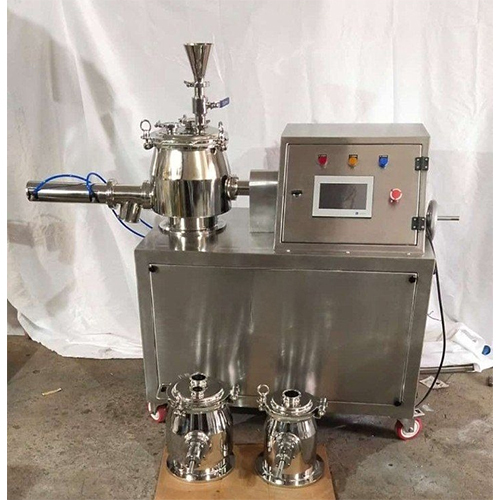
Price 150000 INR / Unit
Minimum Order Quantity : 1 Unit
Color : Other, Silver
Computerized : No
Automatic : Yes
Drive Type : Electric
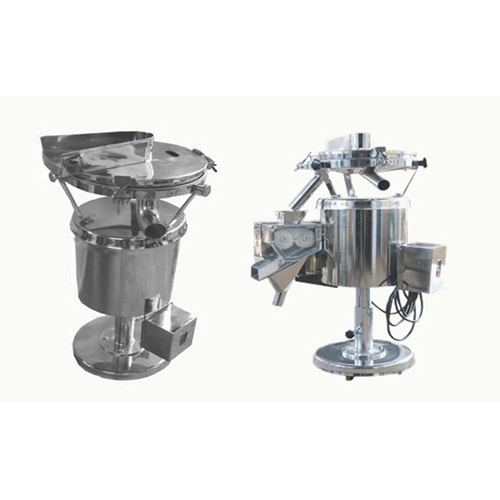
Price 50000 INR / Unit
Minimum Order Quantity : 1 Unit
Color : Other, Silver
Computerized : No
Automatic : Yes
Drive Type : Electric
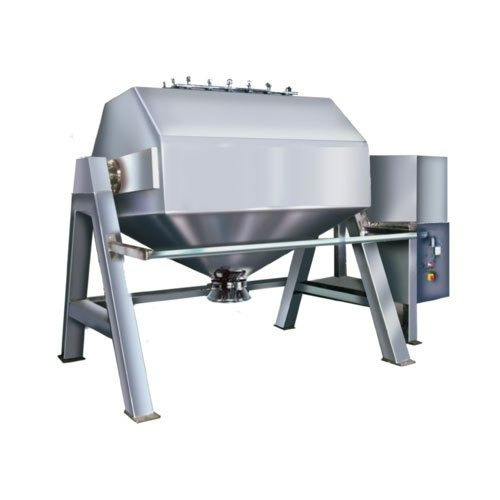
Price 650000 INR / Unit
Minimum Order Quantity : 1 Unit
Color : Other, Silver
Computerized : No
Automatic : Yes
Drive Type : Electric
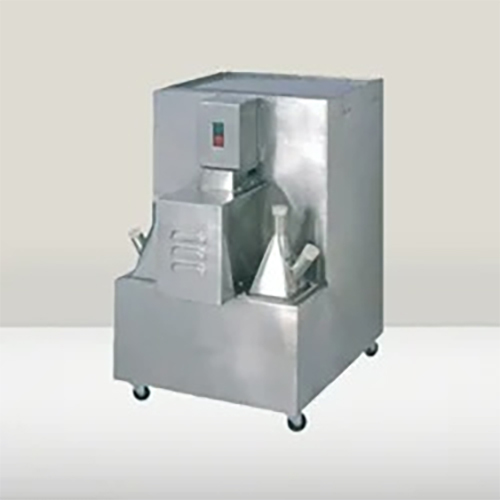
Price 150000 INR / Unit
Minimum Order Quantity : 1 Unit
Color : Other, Silver
Computerized : No
Automatic : Yes
Drive Type : Electric



 English
 Spanish
 French
 German
 Italian
 Chinese (Simplified)
 Japanese
 Korean
 Arabic
 Portuguese
 Send Inquiry
 Get Latest Price

